

Here’s a fun little trivia: What do physical albums, Blockbuster and dinosaurs have in common? Answer: They are all extinct. With the emergence of MP3 players, smartphones and online streaming services, tangible versions of music have sunk into oblivion by now, becoming but a nostalgic memory for those over 20. But despite that overall decline, physical sales of Korean music have been skyrocketing for quite a while… but why is that? Why are K-pop fans still buying physical albums?
I’m gonna go out on a limb and say that you probably know what physical albums are, but if anyone is unsure, let me quickly put your mind at ease. Physicals are the material format of an album—they are sold by a retailer to a consumer, who then becomes the sole owner. In short, they are what you would commonly call CDs.
I know what you must be thinking: ‘Grandma alert! No one uses CDs anymore!’. And yes, that is indeed true! With the advent of the digital era and the takeover of streaming services, the vast majority of people have switched to listening to music in online formats, rather than with CDs. After all, why would you spend €15+ to buy only one album, when for a much smaller monthly fee you can have access to millions of records? And that’s not even touching upon the influence of piracy (where you can have all that music for free), or how CDs have become so obsolete, tech companies no longer include space for them in laptops… Simply put, by now physical albums have become a thing of the past.
But while that is true, we have seen a strange turn of events in the past decade with K-pop albums. Whereas the sales of physical Western titles have been plummeting globally at an annualized rate of over 10% since 2010, K-pop physical sales have been on the rise since 2013, when boy group EXO managed to sell 1M units. Afterwards, K-pop physical sales began steadily increasing, both in South Korea and on a global scale. So much so that it is now almost a given that a K-pop artist will become a million seller sooner or later.
It is now almost a given that a K-pop artist will become a million seller sooner or later.
Albeit being an impressive achievement, I think it can’t help but make you wonder why. I mean, it’s not like K-pop fans don’t listen to music mainly on streaming services just like everybody else these days, so why are they buying physical albums?
After racking my brain trying to figure it out, I finally got an epiphany last week—why don’t I simply ask them? That is, why don’t I directly ask K-pop fans why or why not they choose to purchase physical albums? And that’s exactly what I did.
I launched a survey on social media within an online community of K-pop fans, and quickly received a few hundred responses. Very few participants owned no albums at all, as most of the respondents had between 20 and 40 units, and many even surpassed the 100 mark! Some of the results I got were to be expected, while some were rather surprising to me. But I now have a better understanding as to why so many people buy albums, and why so many others do not.
But before we dive into the survey’s findings, let’s talk about what exactly makes K-pop albums so special…
K-pop albums: More than just music
The K-pop industry is best known for many things: complex choreographies, fun and uplifting beats, and charismatic variety content, just to name a few. But what truly makes the industry stand out from its music peers is the constant impeccable attention for visuals.
Between fashionable and avant-garde-esque styling, and music videos and live performances that could put blockbusters to shame, the visual aspect is placed on the same level of importance as music in K-pop. Thus, it should come as no surprise that even the way the music is packaged is meticulously cared for.
Whereas physical albums by western artists usually consist of just a CD in a jewel case and (maybe) a lyric booklet, K-pop acts take the traditional conceptualization of physicals and move it on the next level (pun intended). CDs and lyric booklets are still there, but they are accompanied by photobooks (containing all photos used for the album’s concept and promotions), random photocards (i.e., a hard card with a picture of an idol on the front), stickers, posters, and even innovative goodies sometimes.
K-pop albums can come in many different shapes and forms, foregoing the old jewel case format. They can vary from intricate classics like f(x)’s mockup design of a VHS tape for Pink Tape, or EXO’s comic book-inspired The War: The Power Of Music, to more minimalist designs like BTS’s Love Yourself trilogy (which even received a Grammy nomination for Best Recording Package in 2019).
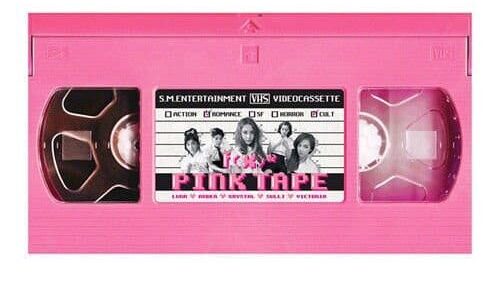
Not only does this help the artist stand out more from the masses, it also ensures fans actually enjoy themselves while unboxing their favourite albums. Opening a K-pop album is not just an act; it’s an experience. Fans get to have fun during the unboxing, discovering all the details and hidden features in the packaging, and finding out which random photocard they received. It’s even become a trend for fans to film themselves while unboxing, and then upload their reaction on YouTube, where the videos can even receive millions of views.
The power of a K-pop album lies in the fact that it can make people want to possess it without listening to (or even liking) the music it contains.
K-pop albums are where creativity meets commerciability, they are the product of a tug-of-war between being art and being a commodity. They have to be fun and creative, but must also be usable and trendy enough for fans to think they are worth the money. And most of all, they have to be so visually appealing they can transcend the music they accompany. The power of a K-pop album lies in the fact that it can make people want to possess it without listening to (or even liking) the music it contains.
In fact, buying an album and actually using it are two separate activities for K-pop fans, and generally they are not consequential. In my survey, only 40% of respondents indicated they actually use the CDs after buying them, with many specifying they use them only when listening on online streaming platforms is not a viable option (e.g., if their car does not have an auxiliary port).
But then, why do K-pop fans purchase physical albums? And why do they not?
Pretty and expensive
Unsurprisingly, the main reason behind the purchase of K-pop physicals as indicated by respondents (80%) was “I think the content inside (photobooks, photocards, posters, etc) is pretty / visually appealing”. Why is this not surprising? Well, as we covered in the last section, K-pop physicals are pretty darn nice to look at, so it shouldn’t come as a shock that people want to have them for the aesthetics of it all!
What did actually surprise me was how many people indicated they buy K-pop physicals for collection purposes, be it photocards or the albums themselves—either option was selected by 35% of respondents. Even though I already knew there were plenty of collectors out there, the statistics still caught me slightly off guard, since K-pop albums are not exactly cheap… actually, they are quite the spendy thing!
“Buying K-pop albums feels like a chase and race.”
Simpler (= Western) physical albums can already round up to €15+ a piece, but when you factor in the added expenditure of photobooks, photocards, posters, stickers, and so on… you can imagine that K-pop physicals will cost you a bit more. With an average between €25 and €55, they definitely fall on the more expensive end of the spectrum. And on top of that, there are also harsh shipping fees, which are usually pretty steep for those outside South Korea (more often than not, they are as much as the album…).
Not to mention, K-pop physicals face a major scarcity issue. That is, they are hard to get a hold of after the preorder period ends, because the number of albums in stock is reflective of the preorder numbers. Thus, if you did not preorder, you are unsure to find a copy after the official drop, which forces you to make the purchase in a limited time window. And adding fuel to the fire, there’s the peculiarity of K-pop physicals increasing in monetary value after the official release of the record. Meaning that even if you’re lucky enough to find a copy, the price will probably be inflated. As one respondent put it, “Buying K-pop albums feels like a chase and race”.
That’s why the fact that “I cannot afford it financially” being the #1 chosen response (61%) for respondents who do not buy physicals did not surprise me in the slightest. Not everyone has 70 bucks to drop on a K-pop album, and that is okay!
The usefulness of the useless
Another option which I knew was going to be a popular choice among non-buyers was “I do not have any use for them / I do not care about them”, which was chosen by 50% of the cohort.
“[K-pop albums] are just an overpriced decoration.”
Given their price and utility (or lack thereof), K-pop physicals can be categorized as luxury goods purchasable for hedonic consumption, which is not something everyone enjoys. If you are not really sure what that means, worry not—I’ll give you a spark notes explanation of what that entails. To put it simply, hedonic consumption refers to the usage of products in order to spark emotional arousal in oneself, rather than to fulfil primary needs (which is referred to as utilitarian consumption). Hence, it is something used to describe the purchase of luxury goods (i.e., products that are not essential but are highly desired).
As the utility of K-pop physical albums doesn’t really go beyond making the owner happy, they check all the boxes for luxury items. Thus, they are not worth the money for people who are not willing to spend that much on something with no practical use. As one respondent bluntly put it, “[K-pop albums] are just an overpriced decoration”.
Pride and parasocial
The second most popular reason (50%) for buying physical copies was “I want to support the artist and increase their sales”, which is yet another unsurprising result.
Parasocial attachments (i.e., one-sided relationships between fans and media personalities) are a widespread phenomenon within K-pop fandoms, and it’s common for fans to feel a sense of pride and/or fulfilment whenever their favourite artists reach commendable achievements. Ergo, it’s not unusual for fans to believe their duties as supporters extend to contributing to the artist’s paycheck by buying anything they put out.
Knowing this, K-pop companies capitalize heavily on these parasocial interactions by maximizing on the amount of content offered and producing different design versions of the same album. The inside (the music) is the same, but the outside is different, and that makes it worth a few more euros in the eyes of fans. And the higher the sales are, the higher the artist will place on music charts, which is the goal to both companies and the idols’ admirers.
A short-coming on the idol’s part is “embarrassing [for their] fans.”
Companies want their acts to score a high spot on music charts for obvious reasons (more fame and revenue for themselves), and fans’ reasoning is not that much different… Actually, it is not at all different. Fans want their favourite artists to have more fame and revenue not only because they think the idols deserve it, but also so they can have bragging rights on social media.
Many fans see accomplishments of their favourite celebrities as an extension of their own, and I have long known that this phenomenon is particularly strong within K-pop fandoms. And that’s why it’s a custom among fans of the genre to bulk buy thousands of copies of an album, in order to boost the artist’s final sale numbers.
As one respondent commented, a short-coming on the idol’s part is “embarrassing [for their] fans.” Being a K-pop enthusiast with an active presence on social media, that remark did not faze me at all.
K-pop albums go green
Unfortunately, bulk buying has quite the drawbacks. Not only does it call into question the validity of K-pop acts’ album sales (are those 1M albums going to 1M different people, or just the same 100k?), but it also has strong environmental and social negative impacts (which was indicated as a concern by 30% of respondents).
First of all, the fact that so many units are brought en masse makes you wonder, where do the extra copies go? The answer is both nice and disturbing: They get donated to orphanages.
“What you’re doing is not donating, you’re dumping your garbage on us.”
That seems nice in theory, but Korean NGOs who work with orphanages have complained about it at length, pointing out how the donations are actually useless to children in those establishments. “What you’re doing is not donating, you’re dumping your garbage on us” said a spokesperson of an organization, and that “These so-called donations [do not] come with good intentions”. Chilling words, if I may add.
Plus, manufacturing so many albums has quite the sizable ecological footprint, and when you take into account that a large portion of the copies will go to waste, that just seems ridiculous.
Nevertheless, there are some K-pop companies which took this into account, and attempted initiatives to make their sales greener. Several artists have announced their physical albums will be manufactured with recycled materials, and some are even going as far as trying to eliminate them almost altogether, in order to dramatically reduce their carbon footprint.
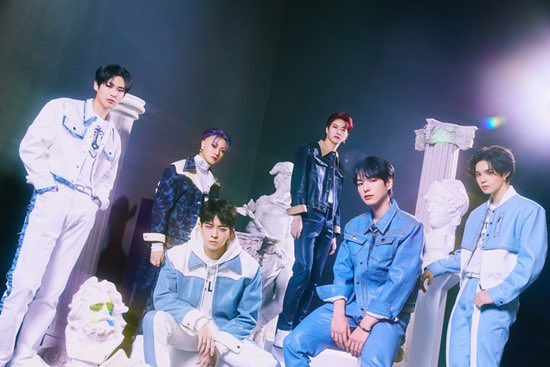
Boy group VICTON, for example, launched an initiative for their comeback in Jan 2022 called a platform album, which offers fans the opportunity to purchase a digital version of the record, where you will only be mailed the photocard and be emailed a download code for the songs. This is a brilliant idea, as photocards usually are the most valued and desired element of the physical contents, and this way the environmental impact won’t be as large. Fans are happy, idols are happy, and the planet is happy… it’s a win for everyone!
The road ahead
So, what is the future of K-pop physical albums? Will people keep buying, or will sales start to plummet?
Well, I think it’s safe to say that sales will not go down anytime soon, at least according to my survey. Despite many respondents stating they have environmental concerns, or criticizing bulk buying and how physicals are used by companies in their ploys to manipulate fans, 75% said they will continue (or will start) purchasing physical copies in the future.
“There is a lot of inner-fandom shaming that goes on whenever you don’t own any albums.”
Furthermore, the notion that buying physical albums is part of your “duties” as a fan is still going strong among K-pop affectionados. To quote one respondent, there is a lot of “inner-fandom shaming that goes on whenever you don’t own any albums”. And that’s not helped by companies actively exploiting this form of mob mentality via the release of different physical versions of the same record.
Just as it’s not likely for fans to stop mass buying, odds are K-pop companies will not stop mass producing. After all, we’re talking about giant corporations here—the choice between ethics and money is an easy one for them, and we all know which option they will ultimately pick.
It is a vicious cycle, one which neither companies nor fans are likely to exit in the foreseeable future. It’s just like that song goes: they just made a million and they’re STILL not satisfied. But how many more albums will it take for everyone to be satisfied?